
Mabon is the festival of the autumn equinox. It’s a celebration of balance, reflection, and gratitude for the second harvest.
In ancient times, Mabon marked the point when day and night are equal, just before the dark half of the year begins. It’s a time to pause and honour both light and shadow—within nature and within ourselves.
Today, many spiritual and secular communities still celebrate Mabon. It’s a time to give thanks for what the year has brought and prepare for the stillness ahead. Mabon is celebrated around September 21st–24th in the Northern Hemisphere.
This post tells you everything you need to know about celebrating Mabon.
1. History and Significance of Mabon
Ancient Roots
Mabon aligns with the autumn equinox—when day and night are equal. It’s one of the eight festivals in the Wheel of the Year. Though the name “Mabon” is modern (coined in the 1970s), the festival has ancient roots in harvest traditions.
Many cultures honoured the equinox with feasts, offerings, and rituals. It was the second harvest, after Lammas but before Samhain. People gathered the last fruits, vegetables, and grains before the cold months began.
Cultural Evolution
Over time, Mabon became associated with balance, reflection, and gratitude. Some see it as a pagan Thanksgiving. Others view it as a spiritual moment to honour the dying light and prepare for the inward journey of winter.
While “Mabon” refers to a Welsh god, the equinox itself was honoured globally—from Greek to Celtic to Native traditions.
Themes of the Festival
- Gratitude for the second harvest
- Balance between light and dark
- Letting go and preparing for rest
- Honouring both life and loss
2. Mabon Correspondences
Mabon is rich in seasonal symbols and meanings. These correspondences can guide your altar, rituals, and daily practices throughout the equinox.
🔆 Symbols
These are the most common items linked to Mabon. Use them in your space, offerings, or meditations:
- Apples and pomegranates
- Squash, pumpkins, and root vegetables
- Acorns and pinecones
- Grapes and wine
- Balance scales
- Cornucopias
- Autumn leaves
- Colors: deep red, orange, gold, brown, dark green
💫 Themes
These are the key energies and ideas of the festival:
- Gratitude and harvest
- Balance and reflection
- Preparation for darkness and rest
- Transformation and release
- Honouring the cycle of death and rebirth
🔥 Traditional Practices
Simple customs that honour the season:
- Sharing a meal made from autumn produce
- Lighting candles in red, gold, or brown
- Leaving offerings of apples or wine outside
- Writing down things to let go of and burning the list
- Decorating with fallen leaves, acorns, and gourds
3. Mabon Altar Ideas
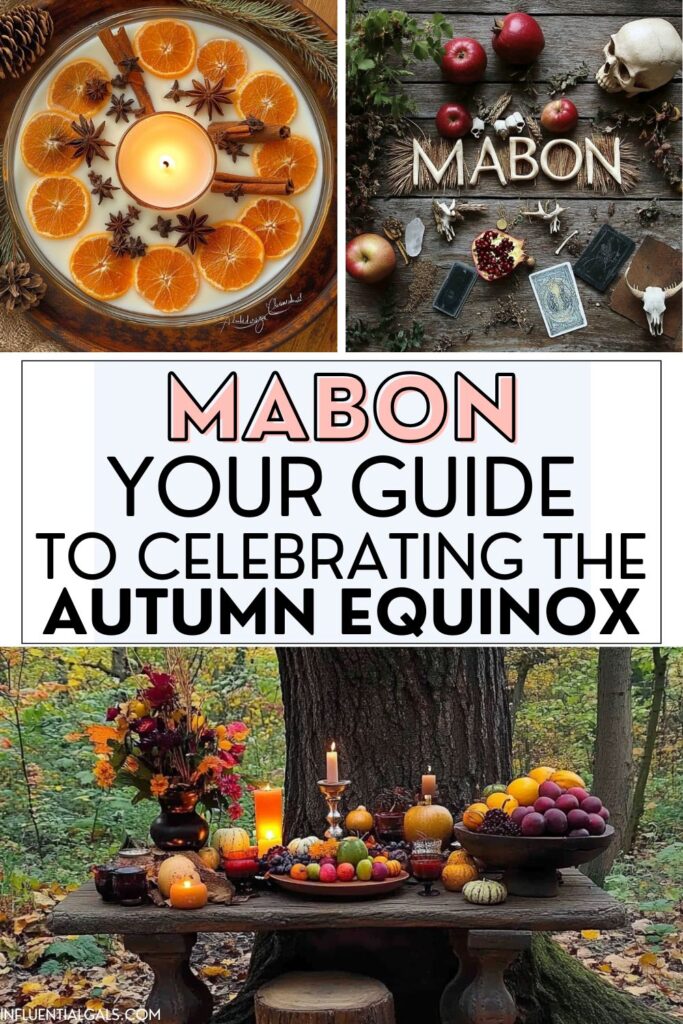
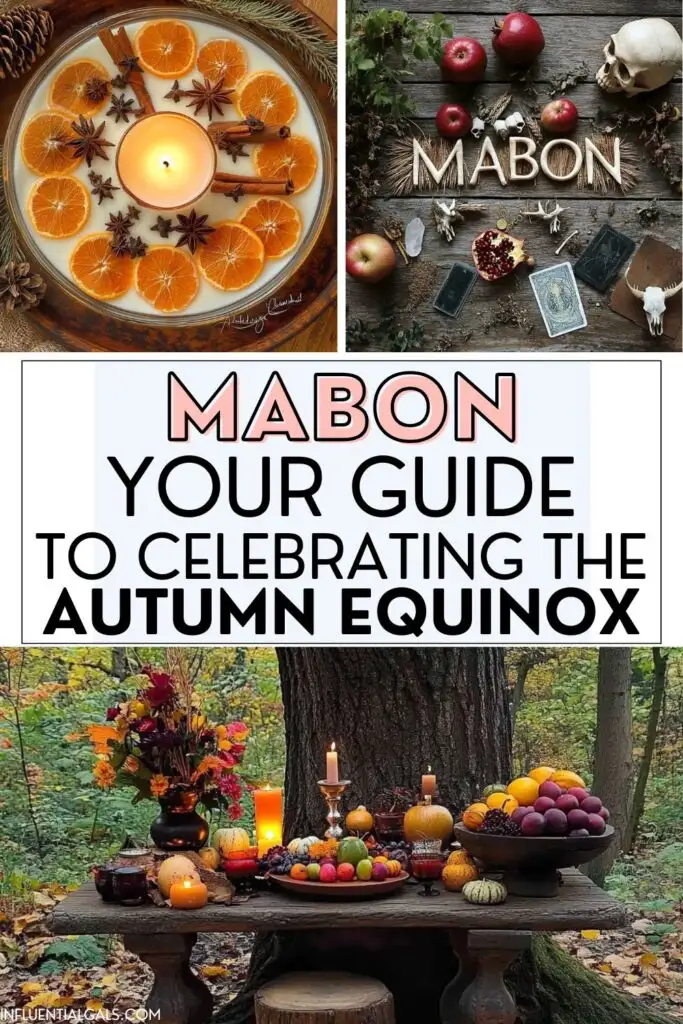
A Mabon altar is a way to honour balance, gratitude, and the changing season. It reflects both the abundance of the harvest and the beauty of letting go.
🍎 What to Include
- Apples or pomegranates – symbols of wisdom, harvest, and the underworld
- Pumpkins, squash, or gourds – signs of the final harvest
- Fallen leaves and acorns – reminders of change and new beginnings
- Candles – in red, gold, brown, or dark green
- Crystals – like smoky quartz, amethyst, obsidian, or moss agate
- Wine or grape juice – traditional offering of thanks
- A small balance scale – to symbolise the equinox
- Written affirmations or gratitude notes – what you’re thankful for this season
- Mini broom or leaf – to sweep away the old and invite new energy
Set your altar with care and intention. Light a candle. Say thank you for what you’ve harvested, and invite clarity as the darker season begins.
Check out the following post:
4. Seasonal Recipes for the Autumn Equinox
Mabon is a time to gather, share food, and celebrate the second harvest. Recipes made with autumn fruits and vegetables connect you to the season’s energy.
🍲 Traditional Foods for Mabon
- Apple pie or baked apples – sweet, grounding, and symbolic of knowledge
- Roasted root vegetables – carrots, parsnips, sweet potatoes, and beetroot
- Pumpkin or squash soup – warm, comforting, and full of harvest energy
- Fresh bread or cornbread – a nod to the harvest cycle
- Grape or berry jam – preserves to carry the sweetness into winter
- Mulled cider or wine – spiced drinks to warm the body and spirit
🕯 How to Celebrate with Food
- Share a home-cooked meal with loved ones
- Use local, seasonal ingredients
- Say a short blessing before eating:
“For all I’ve received, I give thanks. May this food nourish me through the season ahead.” - Leave a small portion outside as an offering to the Earth
Even one simple dish can be a powerful way to honour the turning of the Wheel.
Check out the following post:
5. Simple Rituals and Offerings
Mabon rituals are about balance, gratitude, and letting go. They can be simple, personal, and deeply meaningful.
🕯️ Candle Ritual for Balance
- Choose two candles: one black, one white
- Light them to represent dark and light
- Say: “I honour the balance in all things—within and around me.”
- Sit in silence or reflect in a journal
🍎 Apple Offering
- Cut an apple in half to reveal the five-pointed star inside
- Leave the halves on your altar or under a tree
- Say: “For the blessings I’ve received, I offer thanks.”
📝 Release Ritual
- Write down what you’re ready to release
- Burn it in a fire-safe dish or bury it in the soil
- Say: “I let go with love and make space for rest and renewal.”
🌰 Nature Offering
- Collect fallen leaves, acorns, or herbs
- Place them in a basket or scatter them outdoors as a thank-you
- Pour a little cider, wine, or water as a libation
💧 Autumn Equinox Bath
- Add rosemary, chamomile, or apple slices to your bath
- Light a candle and reflect on what you’ve harvested this year
- Visualize yourself releasing the past and finding peace
You can do one ritual or several—whatever feels right for you.
6. Mabon Activities
Mabon is a time to slow down and reconnect—with nature, with loved ones, and with yourself. These simple seasonal activities help you celebrate the autumn equinox.
🍁 Outdoor Activities
- Go for a walk and collect autumn leaves, acorns, or conkers
- Watch the sunset on the day of the equinox
- Visit a forest, orchard, or garden to connect with the changing season
- Leave an offering at the base of a tree
🏡 At-Home Ideas
- Decorate your space with leaves, gourds, and candles
- Make a gratitude jar and add notes each day
- Prepare a seasonal meal with family or friends
- Organize your space—decluttering is a way to let go
✍️ Reflective Practices
- Journal about what you’ve harvested in your life this year
- Create a list of what you’re releasing and what you’re inviting
- Make or update your vision board for the darker season
- Meditate on balance—what areas of your life feel full? What needs rest?
You don’t need to do everything. Pick what feels right and go slow.
7. Mabon Traditions
While “Mabon” is a modern name, many of its traditions echo ancient seasonal practices. These customs honour the harvest, the equinox, and the turning inward.
🍷 Honouring the Second Harvest
Mabon is the second of three harvest festivals. It’s a time to store what’s needed and prepare for winter. Traditional ways to celebrate include:
- Harvesting apples, grapes, squash, and root vegetables
- Making jams, pickles, or cider to preserve the season’s gifts
- Hosting a harvest meal or giving extra food to those in need
⚖️ Marking the Balance
Equinox celebrations often focus on the balance between light and dark. Some traditional practices include:
- Lighting two candles (light and dark) to honour the equinox
- Creating mandalas or altars with symmetrical designs
- Sitting in stillness during sunset
🧺 Community and Giving Back
In many cultures, the autumn harvest was shared with the wider community. You can honour this tradition by:
- Donating food or clothes
- Sharing a meal with neighbours
- Making offerings to nature spirits or ancestors
Mabon traditions remind us that everything we do now—what we keep, what we give, what we release—shapes the months ahead.
8. Crystals for Mabon
Crystals used during Mabon support balance, release, grounding, and inner reflection. Use them on your altar, in rituals, or carry them during the season.
🍂 Best Crystals for Mabon
- Smoky Quartz – Grounding, protection, and letting go
- Amethyst – Spiritual balance, intuition, and inner peace
- Obsidian – Shadow work, truth, and deep healing
- Moss Agate – Connection to Earth and seasonal cycles
- Tiger’s Eye – Strength, focus, and courage to move forward
- Labradorite – Transformation and embracing change
- Carnelian – Motivation, creativity, and energy for action
✨ How to Use
- Place them on your altar with autumn leaves or apples
- Hold during meditation or journaling
- Use in a release ritual—carry one while burying your intention list
- Cleanse in the sunlight on the equinox or under moonlight
Choose the crystals that feel right for you. Let them support your transition into the darker half of the year.
9. Mabon Oil Blend
Anointing oils help you connect with Mabon’s grounding, reflective energy. Use them for dressing candles, anointing tools, or during meditation and rituals.
🧴 DIY Mabon Oil Blend
Base Oil (1 tablespoon)
- Sweet almond, jojoba, or olive oil
Essential Oils (5–10 drops total)
- Cedarwood – grounding, stability
- Frankincense – spiritual insight, release
- Orange – joy and warmth
- Rosemary – clarity and remembrance
- Patchouli – letting go and earthy connection
Optional Add-Ins
- Dried apple peel
- Pomegranate seeds
- Crushed dried leaves
- A tiny piece of smoky quartz or amethyst
🕯 How to Use
- Anoint candles, altar tools, or yourself before ritual
- Add a few drops to a warm bath
- Rub into your hands before journaling or meditation
- Use while saying: “I ground myself in this season of change.”
Store your blend in a dark glass bottle and label it. Use throughout the Mabon season to stay rooted and present.
10. Working with Deities at Mabon
Mabon is a time of balance, transition, and gratitude. Many deities connected to harvest, the underworld, or seasonal change are honoured during this time.
🍇 Deities to Honour
- Mabon ap Modron (Welsh) – A god of youth, rebirth, and the hidden child of the mother. Symbolises return and release.
- Persephone (Greek) – Goddess of the underworld and spring, representing descent and balance between light and dark.
- Demeter (Greek) – Goddess of grain and the harvest. She grieves Persephone’s descent at this time, symbolising loss and letting go.
- The Green Man – Spirit of the forest and the Earth’s cycles, now entering a time of rest.
- The Crone – A sacred face of the goddess emerging as the year wanes. She brings wisdom, endings, and transformation.
🕯 Offerings
- Apples, pomegranate seeds, wine, or baked goods
- Autumn leaves or herbs like rosemary and sage
- A written note of thanks or reflection
- Lighting a candle at dusk and speaking from the heart
You don’t need to follow a strict tradition. Just choose what resonates with you and honour it with presence and gratitude.
11. Spellwork and Manifestation for the Autumn Equinox
Mabon is a powerful time for inner work. The energies of balance, release, and gratitude make it ideal for reflective spells and gentle manifestation.
✨ Gratitude Spell
- Write down everything you’re thankful for
- Place the list under an apple or pomegranate on your altar
- Say: “I honour all I’ve been given. May the harvest bless those around me too.”
- Bury the list in the earth or keep it in a journal
🕯 Balance Spell
- Light two candles: one dark, one light
- On one paper, write what you want to let go
- On the other, write what you want to invite
- Burn or bury the release paper
- Keep the intention paper until the next sabbat
🍂 Release Ritual
- Collect autumn leaves during a walk
- Speak aloud what you’re releasing as you drop each leaf
- Leave them by a tree or river with a simple offering like water or herbs
📖 Manifestation Journaling
- Reflect on the past season: what have you grown or achieved?
- Write your intentions for the dark season ahead—what you want to nurture slowly
- Keep your journal on your altar or bedside
Mabon spells are quiet and thoughtful. Focus on steady change, spiritual insight, and honouring what no longer serves you.
12. Linking Mabon to the Wheel of the Year
Mabon is the second harvest and the point of perfect balance—day and night are equal. It stands opposite Ostara (spring equinox) and marks the shift toward the darker half of the year.
🌀 Where Mabon Sits on the Wheel
- Follows Lammas, the first harvest (Aug 1)
- Precedes Samhain, the final harvest and ancestral festival (Oct 31)
- Falls between Lughnasadh and Samhain on the Wheel of the Year
- Celebrated around September 21st–24th
🌗 What It Represents
- The tipping point between light and dark
- A time to give thanks and begin turning inward
- A call to balance action and rest
- The sacred pause before deeper release and renewal
As part of the Wheel, Mabon reminds us that everything moves in cycles—growth, harvest, decay, and rebirth. By honouring this turning point, we prepare spiritually for the season ahead.